


Dismantling the Works of Darkness: A Biblical Guide
The Destruction of Evil Machinery: Dismantling the Works of Darkness
God can use you in dismantling the works of darkness. Throughout the Bible, a powerful pattern emerges: whenever wickedness threatens His purposes, God raises willing people to stand with Him, obey His voice, and reveal His power and righteousness.
God does not depend on human strength, qualifications, influence, or resources to accomplish His purposes. He is sovereign and has unlimited power. Yet, in His wisdom, He often chooses to work through people who are willing to surrender themselves to Him.
He called Moses to face Pharaoh and lead Israel out of bondage, and raised Elijah to challenge the altars of Baal and turn an entire nation back to the true God. He secured a stunning victory for Jehoshaphat against overwhelming military odds, and guided David through countless battles, making him a king whose strength was rooted entirely in divine direction.
These accounts reveal an important spiritual principle: God can use an available and obedient person to confront wickedness, dismantle destructive systems, and advance His righteous purposes.
What is Evil Machinery?
The expression evil machinery describes the organised instruments, practices, structures, and influences through which wickedness operates. These may include oppression, idolatry, deception, injustice, corruption, intimidation, spiritual bondage, and systems that oppose God’s truth and righteousness.
The destruction of evil machinery, therefore, is not a call to attack people. It is a call to stand against evil, expose deception, resist unrighteousness, uphold truth, and become instruments of God’s kingdom.
God is not merely looking for people who possess impressive qualifications. He is looking for people who surrender their hearts to Him—those He can actively prepare, equip, empower, and send.
The question is not simply whether you are qualified for God’s assignment. It is whether you are willing to obey Him and allow Him to equip you.
Understanding Evil Machinery: What Does It Mean to Dismantle the Instruments of Wickedness?
Before examining the biblical examples, it is important to understand what evil machinery represents.
Machinery is a collection of interconnected components that work together to produce a particular result. In a similar metaphorical sense, evil machinery describes the interconnected activities, structures, strategies, and influences through which wickedness advances.
In Scripture, wickedness rarely manifests merely through a single individual. Sometimes it becomes established through a network of ungodly decisions, corrupt leadership, idolatrous practices, unjust policies, deception, and oppressive structures.
Consider some biblical examples:
A. Pharaoh’s oppressive machinery in Egypt
Pharaoh established a system that exploited the Israelites, subjected them to forced labour, and attempted to suppress their population.
His oppression included:
- Enslaving an entire people.
- Imposing harsh labour conditions.
- Using taskmasters to enforce oppression.
- Ordering the killing of Hebrew male infants.
- Refusing to release God’s people despite repeated divine warnings.
Read Exodus 1:8–22 and Exodus 5:1–21.
This was more than the wickedness of one individual. Political authority, fear, and organized cruelty sustained this oppressive system.
God confronted that system through Moses and delivered His people.
B. The machinery of Baal worship in Israel
During the reign of Ahab, Israel experienced a serious spiritual crisis. Baal worship had gained widespread influence, dividing the nation’s allegiance to God.
Jezebel and her allied religious leaders used royal influence to actively promote Baal worship
Read 1 Kings 16:29–33; 18:17–40.
The problem was not simply that some individuals worshipped another deity. The crisis involved national leadership, public religious practice, and the abandonment of covenant loyalty to the LORD.
God raised Elijah to confront this spiritual corruption and call the people back to Him.
C. The machinery of fear and intimidation
In Scripture, wickedness also operates through threats, intimidation, accusations, and attempts to silence those who stand for truth.
Pharaoh tried to intimidate Moses. Jezebel threatened Elijah. Saul pursued David because he perceived him as a threat to his throne.
These accounts show how fear discourages obedience and hinders God’s purposes
However, God’s servants must not allow intimidation to become greater than their confidence in Him.
D. The machinery of deception and spiritual opposition
The New Testament explains that the believer’s struggle extends beyond visible circumstances.
Ephesians 6:12 teaches that our struggle is not against flesh and blood but against spiritual wickedness.
This means that Christians must recognise the spiritual dimension of opposition without treating people as enemies or assuming that every disagreement, difficulty, or setback is caused by demonic activity.
To dismantle evil machinery is to confront the operation of wickedness through God’s truth, righteousness, prayer, obedience, spiritual discernment, and the power of the Holy Spirit.
God Does Not Only Look for the Qualified; He Equips Those He Calls
Key Scriptures: Exodus 3:1–12; Exodus 4:1–17; 1 Corinthians 1:26–29; 2 Corinthians 3:5–6
One of the most encouraging truths in Scripture is that God’s calling is not limited to people who already possess every qualification required for the assignment.
God is able to equip those He calls.
This does not mean that preparation, training, discipline, wisdom, or competence are unimportant. Rather, it means that human limitations do not have the final authority over God’s purposes.
Moses is an excellent example.
Moses: Called Despite His Inadequacies
When God appeared to Moses at the burning bush, He revealed His intention to deliver Israel from Egyptian oppression.
Exodus 3:7–10 records God’s awareness of the suffering of His people and His decision to send Moses to Pharaoh.
However, Moses did not immediately respond with confidence.
He raised several objections:
First objection: Who am I?
Moses questioned his own suitability for the assignment.
God’s response was not to give Moses a long list of his natural abilities. Instead, He assured him of His presence.
In Exodus 3:12, God promised, “I will certainly be with you.”
This is a foundational principle of divine assignment: God’s presence is more important than self-confidence.
Second objection: What if the people do not believe me?
Moses questioned whether the Israelites would accept his message.
God responded by giving him signs that would authenticate his commission (Exodus 4:1–9).
The rod became a serpent, Moses’ hand became leprous and was restored, and God promised another sign involving water from the Nile.
God was not asking Moses to manufacture supernatural power. He was demonstrating that the assignment would be accompanied by divine authority.
Third objection: I am not eloquent
Moses explained that he was slow of speech and tongue (Exodus 4:10).
God reminded him that He was the Creator of the human mouth and the One who gives people the ability to speak and hear.
God then appointed Aaron to assist Moses.
This is important: God did not tell Moses that he had to accomplish everything by himself. He provided assistance for the assignment.
Lessons from Moses’ Calling
- God’s presence is greater than personal inadequacy. Moses was assured that God would be with him.
- God can provide what the assignment requires. The signs demonstrated that divine power would accompany his mission.
- God can use people to complement your weaknesses. Aaron became Moses’ spokesman.
- Your limitations do not have to become permanent excuses. Moses eventually obeyed and went to Egypt.
- Divine calling requires obedience. The promise of God’s presence did not remove Moses’ responsibility to act.
God Uses People Who Are Available and Willing to Obey
Throughout Scripture, God used people whose backgrounds and natural abilities differed considerably.
- Gideon considered himself insignificant, but God called him a mighty man of valour (Judges 6:11–16).
- Jeremiah felt too young to speak, but God promised to put His words in his mouth (Jeremiah 1:4–10).
- David was overlooked by his family when Samuel came to anoint a king, yet God chose him (1 Samuel 16:1–13).
- The apostles included ordinary working people whom Jesus called, taught, and commissioned (Mark 1:16–20; Acts 4:13).
The lesson is not that preparation is unnecessary. It is that God is not restricted by the qualifications people believe they lack.
Do not allow your perceived inadequacies to become an excuse for disobedience. Make yourself available to God, develop the abilities He gives you, and trust Him to supply what you need for His assignment.
God Used Moses to Confront Pharaoh and Dismantle an Oppressive System
Key Scriptures: Exodus 3:7–12; Exodus 5–12; Exodus 14:13–31
Pharaoh represents one of the clearest biblical examples of oppressive authority resisting God’s purpose.
For generations, the Israelites had lived in Egypt. What began as a place of refuge during Joseph’s lifetime eventually became a place of severe oppression under a new Pharaoh.
The king subjected the Israelites to forced labour, appointed taskmasters over them, and ordered the killing of their male children.
The situation appeared impossible. Pharaoh controlled the political and military power of Egypt, while the Israelites were an enslaved people without the resources to secure their freedom.
Yet God heard their cries.
Exodus 3:7–10 reveals that God saw their affliction, heard their cry, knew their sorrows, and came down to deliver them.
How God dismantled Pharaoh’s machinery of oppression
-
God raised a deliverer.
God called Moses and sent him to confront Pharaoh.
The deliverer was not chosen because he possessed superior political or military power. He was chosen and commissioned by God.
-
God gave Moses a divine message.
Moses was instructed to tell Pharaoh to release God’s people.
The demand was not based on Moses’ personal ambition. It was founded on God’s authority and covenant purpose.
-
God demonstrated His supremacy through signs and wonders.
Through the plagues recorded in Exodus 7–12, God exposed the limitations of Egypt’s power and demonstrated that Pharaoh could not overrule His command.
The plagues were acts of divine judgment and were connected to God’s deliverance of Israel from slavery.
-
God broke the hold of Egyptian oppression.
After the final plague, Pharaoh permitted Israel to leave.
However, he later pursued them, bringing the Israelites to the edge of the Red Sea.
-
God made a way where there appeared to be no way.
At the Red Sea, God instructed Moses to stretch out his hand. The waters parted, and the Israelites crossed on dry ground.
When the Egyptian army pursued them, the waters returned, and the army was defeated (Exodus 14:21–31).
What Does Moses’ Experience Teach Us?
- God sees the suffering of people who are oppressed.
- No earthly authority is greater than God’s sovereignty.
- God can raise people to confront injustice and defend the vulnerable.
- Divine assignments may involve resistance before the breakthrough comes.
- The presence and direction of God are essential when facing overwhelming opposition.
Pharaoh’s machinery of oppression could not withstand God’s intervention.
When God commissions people to confront wickedness, He also provides the direction, authority, wisdom, and strength needed to fulfil His purpose.
God Used Elijah to Confront Baal Worship and Call a Nation Back to Him
Key Scriptures: 1 Kings 16:29–33; 17:1–24; 18:1–46; James 5:17–18
Another remarkable example of God confronting evil is the ministry of Elijah during the reign of King Ahab.
Ahab had married Jezebel, and the worship of Baal became deeply influential in Israel. The king’s conduct provoked the LORD, and the nation faced a serious spiritual crisis.
God raised Elijah as a prophetic voice to confront the nation’s idolatry.
1. Elijah Declared God’s Word Against the Nation’s Idolatry
In 1 Kings 17:1, Elijah announced that there would be neither dew nor rain except at his word.
The drought was a divine judgment within the narrative, and it directly challenged the claims associated with Baal, who was regarded in the surrounding religious culture as a storm and fertility deity.
The conflict was therefore not merely between two religious personalities. It was a confrontation over Israel’s allegiance and the identity of the true God.
2. God Sustained Elijah During the Drought
During the period of drought, God provided for Elijah.
He instructed him to go to the Brook Cherith, where ravens brought him food. When the brook dried up, God directed him to the widow of Zarephath.
Through this widow’s obedience, God sustained Elijah and provided for her household.
Read 1 Kings 17:2–16.
This reveals an important principle: the God who sends His servants on an assignment is also able to sustain them throughout the assignment.
3. Elijah Confronted the Prophets of Baal at Mount Carmel
In 1 Kings 18, Elijah challenged the people to stop wavering between two opinions.
He proposed a public contest in which the prophets of Baal would prepare an offering and call upon their god, while Elijah would prepare an offering and call upon the LORD.
The God who answered by fire would be recognised as the true God.
The prophets of Baal called upon their deity, but no answer came.
Elijah then repaired the altar of the LORD, prepared the sacrifice, and instructed that water be poured over the offering and the surrounding area.
He prayed, and fire fell from heaven, consuming the offering and demonstrating God’s power.
The people responded by declaring that the LORD was God.
What Was the Real Significance of Mount Carmel?
The central issue was not Elijah’s personal greatness. It was the restoration of Israel’s recognition of the LORD.
The narrative challenged the nation’s divided allegiance and exposed the inability of Baal to answer.
The scholarly notes accompanying 1 Kings 18 explain that the drought narrative and the Mount Carmel confrontation are connected to the ancient understanding of Baal as a deity associated with rain and storms. The story challenges that claim and calls Israel back to exclusive worship of the LORD. (See 1 Kings 17–18.)
4. Elijah’s Ministry Was Accompanied by Prayer
James 5:17–18 refers to Elijah as a human being with a nature like ours and describes his earnest prayer concerning the rain.
This is an important reminder that effective ministry is not merely about public demonstrations of power. It also involves a life of dependence on God.
Elijah prayed, obeyed God’s instructions, confronted idolatry, and remained committed to the divine assignment.
5. The Fire in 2 Kings 1: A Particular Judgment Narrative
Another account involving Elijah and fire from heaven appears in 2 Kings 1:9–15.
King Ahaziah sent military captains with their companies of fifty men to summon Elijah. Fire came down from heaven against the first two companies. The third captain approached differently, humbly pleading for his life and the lives of his men.
This account must be understood within its particular Old Testament context of divine judgment against the king’s action and the prophetic mission.
It is not a command for Christians to call fire upon people, attack those who disagree with them, or imitate the physical judgment recorded in that historical narrative.
The New Testament teaches believers to overcome evil with good (Romans 12:17–21) and reminds us that our struggle is not against flesh and blood (Ephesians 6:12).
Lessons from Elijah’s Ministry
- God raises people to confront spiritual compromise.
- A nation can be influenced by ungodly leadership and false worship.
- God’s servants must remain faithful to His Word.
- Prayer is essential in spiritual assignments.
- God can sustain His servants in difficult seasons.
- The ultimate purpose of confronting spiritual error is to restore people to truth and faithful worship.
Elijah’s ministry teaches us that God can use a yielded servant to confront spiritual deception and call people back to Him.
God’s Presence Is Essential for Dismantling the Instruments of Wickedness
Key Scriptures: Exodus 33:12–17; Exodus 34:5–10; Psalm 16:11; Psalm 68:1
One of the most important lessons from Moses’ life is his understanding that the presence of God was indispensable to the assignment.
God had promised to lead Israel towards the land He had prepared for them. However, Moses understood that possessing a destination was not enough. They needed God’s presence throughout the journey.
In Exodus 33:15, Moses made a remarkable declaration: if God’s presence would not go with them, he did not want to proceed.
Why was Moses so concerned about God’s presence?
Moses recognized that the task far exceeded his own strength. He had witnessed Pharaoh’s stubborn resistance, the formidable might of Egypt’s army, the constant complaints of the people, and the daunting trials of guiding a massive multitude through the wilderness. He knew with absolute certainty that human effort alone could never ensure success.
What Does the Presence of God Provide?
-
Direction
God’s presence provides guidance when the path ahead is uncertain.
Israel needed divine direction through the wilderness. The pillar of cloud by day and the pillar of fire by night demonstrated God’s guidance and presence (Exodus 13:21–22).
-
Strength
The presence of God strengthens His people to face challenges that exceed their natural abilities.
-
Confidence
When God is with His people, they have reason to remain confident even when circumstances appear intimidating.
-
Discernment
God’s Word and Spirit help believers distinguish between truth and deception, righteousness and wickedness, and wise decisions and destructive choices.
-
Assurance
The presence of God reminds believers that they are not abandoned in the fulfilment of their assignments.
The Presence of God Is Not a Substitute for Obedience
Moses did not merely desire a spiritual experience. He desired God’s presence because he understood that the journey required God’s direction and power.
Likewise, believers should not seek God’s presence merely for emotional comfort while ignoring His instructions.
A person who desires to be used by God must also be willing to obey Him.
The Voice of God Is a Powerful Weapon Against the Works of Darkness
Key Scriptures: Psalm 29:3–9; Psalm 68:1–2; Isaiah 55:10–11; Hebrews 4:12
The Word and voice of God are central to understanding how God confronts wickedness.
Psalm 29 describes the voice of the LORD as powerful and majestic. Verse 5 specifically speaks of the voice of the LORD breaking the cedars of Lebanon.
This is poetic language describing the overwhelming power and majesty of God.
The psalm presents God’s voice as superior to the forces of nature and worthy of universal worship.
1. God’s Word Carries Divine Authority
When God speaks, His purposes cannot be defeated by human opposition.
Isaiah 55:10–11 compares God’s Word to rain and snow that accomplish their purpose in watering the earth. God’s Word does not return to Him empty but accomplishes what He intends.
This gives believers confidence in the reliability of God’s promises.
2. God’s Word Exposes Deception
Hebrews 4:12 describes the Word of God as living and powerful, discerning the thoughts and intents of the heart.
The Word of God exposes falsehood, confronts ungodly thinking, and provides the truth by which believers can evaluate their lives and decisions.
3. God’s Word Strengthens Believers in Spiritual Warfare
Jesus demonstrated the power of God’s Word when He resisted Satan’s temptations in the wilderness (Matthew 4:1–11).
He did not respond to temptation with human arguments or emotional reactions. He responded with Scripture.
This teaches believers to know, understand, and apply the Word of God.
4. God’s Victory Is Not Limited by Human Strength
Psalm 68:1 begins with a prayer for God to arise and for His enemies to be scattered.
The language expresses confidence in God’s power to confront opposition and establish His authority.
The believer’s confidence must remain in God rather than in personal aggression, threats, or human manipulation.
The Word of God is not a tool for attacking people. It is the truth by which we resist deception, confront sin, renew our minds, and remain steadfast in God’s purpose.
God Gave Jehoshaphat Victory Through Dependence, Prayer, and Praise
Key Scriptures: 2 Chronicles 20:1–30
The experience of King Jehoshaphat provides another powerful illustration of God’s intervention against overwhelming opposition.
During his reign, a coalition of enemy nations came against Judah. The threat was serious, and the king recognised that his military strength was insufficient to confront the approaching forces confidently.
Instead of pretending to have everything under control, Jehoshaphat sought the LORD.
1. Jehoshaphat Recognised the Threat
2 Chronicles 20:3 records that Jehoshaphat was afraid and set himself to seek the LORD.
His fear did not lead him to abandon God. It moved him to prayer.
This is an important lesson: faith does not require us to pretend that challenges are insignificant. Faith directs us to seek God in the face of those challenges.
2. He Called the Nation to Prayer and Fasting
Jehoshaphat proclaimed a fast throughout Judah.
The people gathered together to seek the LORD, demonstrating corporate dependence on God.
There are situations in which prayer, fasting, and collective spiritual commitment help a community refocus on God and seek His direction.
3. He Remembered God’s Faithfulness
In his prayer, Jehoshaphat recalled God’s past dealings with Israel and His covenant promises.
He acknowledged that God possessed power and might and that nobody could withstand Him.
He also honestly admitted that Judah did not know what to do.
His declaration in 2 Chronicles 20:12 is a powerful expression of dependence: their eyes were fixed on God.
4. God Gave Direction Through Jahaziel
The Spirit of the LORD came upon Jahaziel, who delivered God’s message to the people.
He encouraged Judah not to be afraid or discouraged because the battle belonged to God.
God also provided specific instructions concerning where the people should go and how they should position themselves.
This teaches us that prayer should not be separated from obedience to divine direction.
5. Jehoshaphat Appointed Singers to Praise God
One of the most remarkable details of the account is that Jehoshaphat appointed singers to go before the army, praising God for His enduring mercy.
As they began to sing and praise, the LORD caused confusion among the opposing forces, and the enemy coalition turned against itself.
The account is recorded in 2 Chronicles 20:21–23. The emphasis is that God intervened on Judah’s behalf when the people trusted Him and followed His direction.
Lessons from Jehoshaphat’s Victory
- Seek God before reacting to overwhelming opposition.
- Prayer and fasting can help focus a community on God’s direction.
- Remember God’s faithfulness in previous seasons.
- Acknowledge your limitations rather than relying on pride.
- Listen carefully to God’s Word.
- Follow divine instructions with faith.
- Make praise and thanksgiving part of your response to difficulty.
Jehoshaphat’s victory teaches us that God’s power is not limited by the size of the opposition. When His people seek Him and obey His direction, He is able to act in ways beyond their natural ability.
David: A Man Who Sought God’s Direction Before Going to Battle
Key Scriptures: 1 Samuel 23:1–14; 1 Samuel 30:1–20; 2 Samuel 5:17–25
David’s life provides valuable lessons about seeking God’s guidance in the face of opposition.
He was a warrior, a king, and a man who understood that military strength alone was not enough.
Rather than assuming that yesterday’s strategy would work today, David repeatedly sought God’s direction.
1. David Inquired of the LORD at Keilah
In 1 Samuel 23:1–14, David heard that the Philistines were attacking Keilah and looting its threshing floors.
He inquired of the LORD whether he should go and attack the Philistines.
God instructed him to go, and David delivered the people of Keilah.
When he later discovered that Saul was coming to capture him, David again sought God’s direction.
This demonstrates the importance of consulting God both before and after taking action.
2. David Strengthened Himself in the LORD
In 1 Samuel 30, the Amalekites raided Ziklag, burned the city, and took the women and children captive.
David and his men were deeply distressed. His own followers even considered stoning him.
However, the Bible records that David strengthened himself in the LORD his God.
He then inquired of the LORD whether he should pursue the raiders.
God instructed him to pursue them, and David recovered the people and possessions that had been taken.
3. David Did Not Assume Every Battle Required the Same Strategy
In 2 Samuel 5:17–25, the Philistines came against David on two separate occasions.
David inquired of the LORD on both occasions.
God gave him different instructions for each battle.
The first time, David was instructed to attack directly. The second time, he was given a different strategy involving movement around the enemy.
This teaches an important lesson: previous victories should not make us careless about seeking God’s direction in new situations.
Lessons from David’s Life
- Seek God’s direction before making important decisions.
- Do not assume that yesterday’s strategy is appropriate for today’s challenge.
- Strengthen yourself in God when discouragement comes.
- Do not allow fear or pressure to replace spiritual discernment.
- Recognise that obedience is more important than personal confidence.
David’s life was not free from setbacks, opposition, or loss. However, he repeatedly demonstrated the importance of seeking God and depending on His direction.
A person who wants to become an effective instrument in God’s hands must learn to seek God’s counsel rather than relying exclusively on personal experience or natural ability.
How Believers Can Dismantle the Works of Darkness Today
Key Scriptures: Ephesians 6:10–18; 2 Corinthians 10:3–5; James 4:7; Romans 12:17–21
The Old Testament accounts of Moses, Elijah, Jehoshaphat, and David demonstrate God’s power and His dealings with wickedness in particular historical circumstances.
However, believers must interpret these accounts in the light of the New Testament.
The Church is not commissioned to reproduce the physical judgments recorded in ancient Israel’s history.
Ephesians 6:12 teaches that our struggle is not against flesh and blood. Therefore, people must not become the targets of our spiritual warfare.
Our responsibility is to resist evil, uphold truth, proclaim the Gospel, pursue righteousness, pray, and demonstrate the character of Christ.
Here are practical biblical ways believers can confront the works of darkness.
1. Submit Yourself to God
James 4:7 begins with an instruction to submit to God before resisting the devil.
Spiritual authority must operate under God’s authority.
A believer cannot consistently resist evil while deliberately embracing the very practices that dishonour God.
Begin with personal surrender, repentance, obedience, and submission to the Word.
2. Put on the Whole Armour of God
Ephesians 6:10–18 identifies the spiritual resources available to believers:
- The belt of truth.
- The breastplate of righteousness.
- The preparation of the Gospel of peace.
- The shield of faith.
- The helmet of salvation.
- The sword of the Spirit, which is the Word of God.
- Prayer and supplication in the Spirit.
These are not physical weapons. They describe the spiritual resources and disciplines through which Christians stand firm against evil.
3. Resist the Devil Through God’s Word
Jesus resisted temptation by applying Scripture (Matthew 4:1–11).
Believers must learn to recognise deception and respond with the truth of God’s Word.
This requires more than quoting Bible verses. It requires understanding Scripture, believing it, and obeying it.
4. Pull Down Ungodly Strongholds in the Mind
2 Corinthians 10:3–5 describes spiritual weapons that are mighty in God for pulling down strongholds and bringing thoughts into obedience to Christ.
In its immediate context, Paul is addressing arguments, pretensions, and opposition to the knowledge of God.
This passage can be applied to the work of confronting destructive thought patterns, deception, pride, false beliefs, and ideas that contradict the truth of God.
Believers must allow Scripture to renew their thinking and shape their decisions.
5. Stand Against Injustice and Oppression
The Bible repeatedly calls God’s people to defend the vulnerable, pursue justice, and speak for those who are oppressed.
Consider:
- Proverbs 31:8–9 — Speak up for those who cannot speak for themselves.
- Isaiah 1:17 — Learn to do good, seek justice, and defend the oppressed.
- Micah 6:8 — Practise justice, love mercy, and walk humbly with God.
- James 1:27 — Care for vulnerable people and remain unstained by the world.
Dismantling evil machinery can therefore include confronting corruption, protecting vulnerable people, promoting fairness, exposing harmful practices, and refusing to participate in wrongdoing.
6. Use Prayer and Intercession
Prayer is an essential part of spiritual warfare.
Pray for:
- The salvation of people.
- The exposure of deception.
- The deliverance of those experiencing oppression.
- Wisdom for leaders and decision-makers.
- Protection for vulnerable communities.
- The strengthening of the Church.
- The advancement of the Gospel.
First Timothy 2:1–4 encourages believers to pray for all people, including those in authority.
7. Overcome Evil With Good
Romans 12:17–21 provides a vital instruction: do not repay evil for evil.
Instead, believers are called to pursue peace where possible, leave vengeance to God, and overcome evil with good.
This is the character of spiritual victory under the New Covenant.
The goal is not to become an instrument of hatred or revenge. It is to become an instrument of God’s righteousness, mercy, truth, and peace.
8. Depend on the Holy Spirit
Zechariah 4:6 reminds God’s people that His purposes are accomplished not by human might or power but by His Spirit.
The Holy Spirit empowers believers to witness, strengthens them in weakness, produces Christlike character, and enables them to serve faithfully.
Acts 1:8 describes the Spirit’s empowerment for Christian witness.
9. Be Willing to Take Practical Action
Faith does not excuse passivity.
When God gives wisdom and direction, believers should act responsibly.
This may involve:
- Reporting abuse or criminal conduct to appropriate authorities.
- Supporting people affected by injustice.
- Establishing accountable leadership structures.
- Promoting ethical practices in organisations.
- Providing education and practical assistance.
- Speaking truth respectfully and courageously.
- Building institutions that protect dignity and serve people well.
Spiritual conviction and practical responsibility should work together.
What Qualifies a Person to Become an Instrument in God’s Hands?
God’s use of people in Scripture reveals that availability must be accompanied by character, obedience, and dependence on Him.
A person who desires to be used by God should cultivate the following qualities.
1. A Surrendered Heart
Romans 12:1–2 calls believers to present their bodies as living sacrifices and allow their minds to be renewed.
God desires more than occasional religious activity. He desires a life surrendered to Him.
2. Faith and Dependence on God
Hebrews 11:6 teaches that without faith it is impossible to please God.
Moses, Elijah, Jehoshaphat, and David each had to trust God beyond what they could accomplish through natural ability.
3. Obedience to God’s Instructions
First Samuel 15:22 emphasises the importance of obedience over religious performance.
Divine assignments require more than enthusiasm. They require obedience to God’s Word.
4. Spiritual Discernment
First John 4:1 instructs believers not to believe every spirit but to test the spirits.
Spiritual discernment helps believers distinguish truth from deception and avoid being manipulated by false teachings or misleading claims.
5. Courage
Joshua 1:9 encourages God’s servant to be strong and courageous because the LORD is with him.
Courage does not mean the absence of fear. It means remaining faithful to God despite fear and uncertainty.
6. Humility
James 4:6 teaches that God resists the proud but gives grace to the humble.
People who desire to be used by God must not confuse spiritual authority with personal importance.
7. Perseverance
Galatians 6:9 encourages believers not to grow weary in doing good.
Some assignments require patience, discipline, and continued faithfulness before their results become visible.
Seven Practical Signs That You Are Becoming an Instrument of God’s Righteous Purpose
A person becoming useful in God’s hands will increasingly demonstrate the following:
- You are becoming more obedient to God’s Word. Your decisions are increasingly guided by Scripture.
- You are growing in spiritual discernment. You are learning to recognise deception and resist ungodly influences.
- You are developing a consistent prayer life. Prayer is becoming a foundation of your daily walk with God.
- You are becoming courageous in standing for truth. You refuse to compromise righteousness simply to gain acceptance.
- You are becoming useful to others. Your life contributes to the strengthening, encouragement, and restoration of people.
- You are growing in Christlike character. Your conduct increasingly reflects love, humility, patience, and self-control.
- You are becoming fruitful in your assignment. Your gifts and opportunities are being used to serve God’s purposes and advance His kingdom.
These signs are not a formula for earning God’s favour. They are evidence of a life increasingly shaped by His grace and truth.
Important Lessons: What Dismantling Evil Machinery Does Not Mean
Because the language of spiritual warfare can be misunderstood, several distinctions are important.
It Does Not Mean Attacking People
Ephesians 6:12 explicitly identifies the believer’s struggle as spiritual rather than against flesh and blood.
People may participate in wrongdoing, but Christians must not treat human beings as objects of hatred or violence.
It Does Not Mean Every Opponent Is an Agent of Darkness
Not every disagreement, criticism, disappointment, or setback is a spiritual attack.
Believers must exercise wisdom, humility, and discernment rather than automatically labelling people or circumstances as demonic.
It Does Not Mean Seeking Revenge
Romans 12:19–21 instructs believers to leave vengeance to God and overcome evil with good.
The desire to dismantle wickedness must never become an excuse for personal revenge.
It Does Not Mean Every Battle Will Be Won Immediately
Moses faced years of opposition before Israel left Egypt. Elijah experienced discouragement after Mount Carmel. David endured years of persecution before becoming king.
Faithfulness to God does not mean a life without suffering, delay, or difficulty.
It Does Not Mean Human Preparation Is Unnecessary
God equips people, but believers must also grow in knowledge, wisdom, discipline, competence, and character.
Moses received assistance from Aaron. David sought God’s direction. Jehoshaphat consulted with the people.
God’s empowerment does not remove the importance of responsible preparation.
Frequently Asked Questions About Dismantling the Works of Darkness
What does it mean to dismantle the works of darkness?
Dismantling the works of darkness means resisting sin, deception, spiritual opposition, injustice, and practices that contradict God’s righteousness. It involves prayer, obedience, the Word of God, spiritual discernment, and practical action guided by Christian principles.
Does God use ordinary people to confront wickedness?
Yes. Scripture shows God calling and equipping people with different backgrounds and abilities. Moses, Gideon, David, and the apostles demonstrate that God can work through people who depend on Him and respond obediently to His calling.
How did God use Moses to destroy Pharaoh’s evil machinery?
God sent Moses to confront Pharaoh, deliver His message, and lead Israel out of slavery. Through divine signs, the plagues, and the crossing of the Red Sea, God brought judgment upon Egypt and delivered His people (Exodus 3–14).
How did Elijah confront the works of darkness?
Elijah confronted the influence of Baal worship during Ahab’s reign. At Mount Carmel, God answered Elijah’s prayer by fire, demonstrating His supremacy and calling Israel back to the worship of the LORD (1 Kings 18:17–40).
What does the Bible say about spiritual warfare?
Ephesians 6:10–18 teaches believers to stand against spiritual wickedness by putting on the whole armour of God. The passage identifies truth, righteousness, faith, salvation, God’s Word, and prayer as essential resources for standing firm.
Can Christians use the Old Testament examples of divine judgment as a model for attacking people?
No. These accounts belong to particular historical and covenantal settings. Under the New Covenant, believers are instructed to love their enemies, pray for those who persecute them, pursue peace, and overcome evil with good (Matthew 5:44; Romans 12:17–21).
What role does prayer play in dismantling evil?
Prayer enables believers to seek God’s wisdom, intercede for others, resist temptation, receive strength, and remain aligned with His purposes. Scripture repeatedly presents prayer as an essential part of faithful Christian living.
How can I become an instrument in God’s hands?
Begin by surrendering your life to God, studying His Word, cultivating prayer, developing Christlike character, obeying His instructions, and using your abilities to serve others. God equips His people for the work He calls them to do.
What is the difference between fighting people and fighting spiritual wickedness?
Fighting people involves treating human beings as enemies to be attacked or destroyed. Spiritual warfare, as described in Ephesians 6, involves resisting spiritual evil, deception, temptation, and falsehood while maintaining love, righteousness, and respect for human dignity.
Does God still deliver people from oppressive situations today?
God remains able to deliver, protect, strengthen, and provide for people. His help may involve spiritual transformation, practical intervention, the support of other people, wise action, and the work of just institutions. Believers should seek His guidance without assuming that every situation will resolve in the same way as an Old Testament miracle.
Conclusion: Make Yourself Available as an Instrument of God’s Righteousness
The destruction of evil machinery begins with the recognition that God is sovereign, His purposes are righteous, and He is able to work through people who surrender themselves to Him.
Moses confronted Pharaoh and became an instrument of Israel’s deliverance. Elijah challenged Baal worship and called a nation back to God. Jehoshaphat sought the LORD when Judah faced overwhelming opposition. David repeatedly sought divine direction before engaging in battle.
Their experiences reveal that God does not depend on human strength alone to accomplish His purposes.
He calls people, equips them, guides them, strengthens them, and works through their obedience.
However, the ultimate purpose of being used by God is not personal recognition, the destruction of human opponents, or the demonstration of individual power. It is the advancement of God’s righteous purposes and the manifestation of His kingdom.
Today, God still calls believers to stand against wickedness, resist deception, defend the vulnerable, confront injustice, proclaim the Gospel, strengthen the Church, and become instruments of righteousness in their families, communities, workplaces, and nations.
You may not feel sufficiently qualified. Moses did not. You may feel overwhelmed by the scale of the assignment. Jehoshaphat did. You may face intimidation and opposition. Elijah and David did.
But your responsibility is to surrender, seek God’s direction, obey His Word, and depend on the Holy Spirit.
God is still looking for people who will make themselves available to Him—people He can equip, empower, and use to confront wickedness and advance His righteous purposes.
Do not merely pray for God to change the world while refusing to become part of the solution. Ask Him to make you an instrument of truth, righteousness, justice, deliverance, and transformation.
A Closing Prayer
Heavenly Father, thank You because You are sovereign over all the affairs of humanity. Thank You because no power, authority, or system of wickedness is greater than Your power.
Lord, make me an instrument of Your righteousness. Remove every attitude, habit, and disposition that makes me unavailable for Your purpose. Give me a heart that is surrendered, obedient, courageous, humble, and sensitive to Your voice.
Lord, just as You empowered Moses to confront Pharaoh, equip me for every task placed into my hands. As You strengthened Elijah to pierce spiritual deception, grant me the unwavering courage to stand for truth. And just as You guided Jehoshaphat and David, teach me to seek Your divine direction before every decision I make.
Father, empower me by Your Holy Spirit to resist evil, overcome temptation, expose deception, defend the vulnerable, and advance Your kingdom. Help me to use my gifts, abilities, opportunities, and influence for Your glory.
Deliver me from fear, pride, disobedience, and spiritual complacency. Let my life become an instrument through which Your truth is proclaimed, Your righteousness is demonstrated, and Your purposes are advanced.
In Jesus’ mighty name. Amen.
Final Declaration
I am fully available to God and yielded to His purpose. My confidence is not in my own strength, but in the unstoppable power of the Holy Spirit. I am resolved to uphold His truth, walk in integrity, stand firm against evil, and overcome every form of wickedness with good. My life will be an instrument of God’s purpose, and my gifts and abilities will be used for His glory. In Jesus’ name. Amen.
Praying About The Destruction of Evil Machinery: Dismantling Every Instrument of Wickedness
- Father, in the name of Jesus, let every weapon, instrument, and device fashioned against my life, family, assignment, and the advancement of Your purpose be rendered ineffective. Let every tongue that rises against me in judgment be condemned, and establish Your righteousness in my life.
Isaiah 54:17 (NKJV)
“No weapon formed against you shall prosper, and every tongue which rises against you in judgment you shall condemn. This is the heritage of the servants of the Lord, and their righteousness is from Me,” Says the Lord.”
- Father, arise and frustrate every carefully designed scheme of wickedness against my life and Your purpose. Let every strategy conceived in darkness collapse, and prevent the perpetrators of evil from accomplishing their intended objectives.
Job 5:12 (NKJV)
“He frustrates the devices of the crafty, so that their hands cannot carry out their plans”.
- O Lord, overthrow every counsel, conspiracy, and wicked agenda devised against Your will and purpose for my life, family, church, and generation. Let every plan that contradicts Your counsel come to nothing, and let Your eternal purpose prevail.
Psalm 33:10–11 (NKJV)
“The Lord brings the counsel of the nations to nothing; He makes the plans of the peoples of no effect. 11 The counsel of the Lord stands forever, the plans of His heart to all generations.”
Defeating the Forces of Darkness: A Scriptural Handbook
- Father, expose every hidden scheme of wickedness and bring every evil device to nothing. Let those who dig destructive pits and prepare instruments of oppression be prevented from accomplishing their evil intentions. Deliver the innocent from every trap.
Psalm 7:14–16 (NKJV)
Behold, the wicked brings forth iniquity; Yes, he conceives trouble and brings forth falsehood. 15 He made a pit and dug it out, and has fallen into the ditch which he made. 16 His trouble shall return upon his own head, and his violent dealing shall come down on his own crown.
- Father, let every evil intention and wicked imagination directed against Your purpose for my life be rendered powerless. May every plan that is contrary to Your will fail, and let no evil agenda gain the strength to prevail.
Psalm 21:11 (NKJV)
“For they intended evil against You; They devised a plot which they are not able to perform.”
- O Lord, arise as my defender against every hidden trap, secret conspiracy, and unjust pursuit. Expose every concealed instrument of wickedness, deliver me from destruction, and let every trap designed for my downfall fail.
Psalm 35:4–8 (NKJV)
“Let those be put to shame and brought to dishonor who seek after my life; Let those be turned back and brought to confusion who plot my hurt. 5 Let them be like chaff before the wind, and let the angel of the Lord chase them. 6 Let their way be dark and slippery, and let the angel of the Lord pursue them. 7 For without cause they have hidden their net for me in a pit, which they have dug without cause for my life. 8 Let destruction come upon him unexpectedly, and let his net that he has hidden catch himself; Into that very destruction let him fall.”
Overcoming Wickedness: A Scriptural Approach to Spiritual Warfare
- Father, expose every secret operation, hidden conspiracy, malicious communication, and instrument of wickedness operating against my life and assignment. Let every concealed plan be brought into the light, and let Your righteous judgment prevail over every work of darkness.
Psalm 64:1–10 (NKJV)
“Hear my voice, O God, in my meditation; Preserve my life from fear of the enemy. 2 Hide me from the secret plots of the wicked, from the rebellion of the workers of iniquity, 3 Who sharpen their tongue like a sword, and bend their bows to shoot their arrows—bitter words, 4 That they may shoot in secret at the blameless; Suddenly they shoot at him and do not fear. 5 They encourage themselves in an evil matter; They talk of laying snares secretly; They say, “Who will see them?” 6 They devise iniquities: “We have perfected a shrewd scheme.” Both the inward thought and the heart of man are deep. 7 But God shall shoot at them with an arrow; Suddenly they shall be wounded.
8 So He will make them stumble over their own tongue; All who see them shall flee away. 9 All men shall fear, and shall declare the work of God; For they shall wisely consider His doing. 10 The righteous shall be glad in the Lord, and trust in Him. And all the upright in heart shall glory.”
- Father, deliver me from every instrument of wickedness, every agent of oppression, and every scheme designed to bring harm or destruction. Preserve me from evil intentions, frustrate the plans of the wicked, and keep me under Your divine protection.
Psalm 140:1–8 (NKJV)
“Deliver me, O Lord, from evil men; Preserve me from violent men, 2 Who plan evil things in their hearts; They continually gather together for war. 3 They sharpen their tongues like a serpent; The poison of asps is under their lips. Selah 4 Keep me, O Lord, from the hands of the wicked; Preserve me from violent men, who have purposed to make my steps stumble. 5 The proud have hidden a snare for me, and cords; They have spread a net by the wayside; They have set traps for me. Selah 6 I said to the Lord: “You are my God; Hear the voice of my supplications, O Lord. 7 O God the Lord, the strength of my salvation, you have covered my head in the day of battle. 8 Do not grant, O Lord, the desires of the wicked; Do not further his wicked scheme, lest they be exalted. Selah”
- Father, let every strategy, intelligence, manipulation, and wicked counsel organized against Your purpose be defeated by Your superior wisdom and power. Let no human or spiritual scheme prevail against what You have ordained.
Proverbs 21:30 (NKJV)
“There is no wisdom or understanding or counsel against the Lord.”
Shattering Unrighteous Systems: A Biblical Blueprint for Victory
- Father, dismantle every conspiracy, wicked alliance, and coordinated agenda formed against my life and the work You have committed into my hands. Let every gathering that opposes Your purpose be scattered, and let every evil counsel come to nothing.
Isaiah 8:9–10 (NKJV)
“Be shattered, O you peoples, and be broken in pieces! Give ear, all you from far countries. Gird yourselves, but be broken in pieces; Gird yourselves, but be broken in pieces. 10 Take counsel together, but it will come to nothing; Speak the word, but it will not stand, for God is with us.”
- Father, frustrate every deceptive operation, false prediction, manipulation, and counterfeit spiritual influence working against Your purpose. Let every instrument of deception lose its power, and let Your truth prevail in every situation concerning my life.
Isaiah 44:24–25 (NKJV)
“Thus says the Lord, your Redeemer, and He who formed you from the womb: “I am the Lord, who makes all things, who stretches out the heavens all alone, who spreads abroad the earth by Myself; 25 Who frustrates the signs of the babblers, and drives diviners mad; Who turns wise men backward, and makes their knowledge foolishness”
- Father, empower me to stand firmly in Your Word and confront everything that opposes Your righteous purpose. By Your authority, uproot every ungodly pattern, pull down every structure of wickedness, and establish what is consistent with Your will.
Jeremiah 1:9–10 (NKJV)
“Then the Lord put forth His hand and touched my mouth, and the Lord said to me: “Behold, I have put My words in your mouth. 10 See, I have this day set you over the nations and over the kingdoms, to root out and to pull down, to destroy and to throw down, to build and to plant.”
Dismantling Evil Systems: A Scriptural Manual
- Father, make me a yielded instrument in Your hands for the advancement of righteousness and the dismantling of wickedness. Use my life, gifts, influence, and resources to confront injustice, expose evil, and advance Your kingdom. Let my strength and abilities remain submitted to Your will.
Jeremiah 51:20–23 (NKJV)
“You are My battle-ax and weapons of war: For with you I will break the nation in pieces; With you I will destroy kingdoms; 21 With you I will break in pieces the horse and its rider; With you I will break in pieces the chariot and its rider; 22 With you also I will break in pieces man and woman; With you I will break in pieces old and young; With you I will break in pieces the young man and the maiden; 23 With you also I will break in pieces the shepherd and his flock; With you I will break in pieces the farmer and his yoke of oxen; And with you I will break in pieces governors and rulers.”
- Father, equip me with spiritual strength to dismantle every stronghold, ungodly argument, deceptive ideology, and thought pattern that exalts itself against the knowledge of God. Let every influence that resists the truth of Christ be brought into obedience to Him.
2 Corinthians 10:3–5 (NKJV)
“For though we walk in the flesh, we do not war according to the flesh. 4 For the weapons of our warfare are not carnal but mighty in God for pulling down strongholds, 5 casting down arguments and every high thing that exalts itself against the knowledge of God, bringing every thought into captivity to the obedience of Christ”
- Father, strengthen me with Your might and equip me with the whole armour of God. Enable me to stand against every scheme of the devil, withstand every spiritual attack, remain steadfast in faith, and overcome through truth, righteousness, faith, salvation, Your Word, and prayer.
Ephesians 6:10–18 (NKJV)
“Finally, my brethren, be strong in the Lord and in the power of His might. 11 Put on the whole armor of God, that you may be able to stand against the wiles of the devil. 12 For we do not wrestle against flesh and blood, but against principalities, against powers, against the rulers of the darkness of this age, against spiritual hosts of wickedness in the heavenly places. 13 Therefore take up the whole armor of God, that you may be able to withstand in the evil day, and having done all, to stand.
14 Stand therefore, having girded your waist with truth, having put on the breastplate of righteousness, 15 and having shod your feet with the preparation of the gospel of peace; 16 above all, taking the shield of faith with which you will be able to quench all the fiery darts of the wicked one. 17 And take the helmet of salvation, and the sword of the Spirit, which is the word of God; 18 praying always with all prayer and supplication in the Spirit, being watchful to this end with all perseverance and supplication for all the saints.”
Additional Prayer Declarations
- Every instrument of wickedness assigned against the advancement of God’s purpose shall fail in the name of Jesus.
- Every hidden scheme of darkness shall be exposed and brought to nothing.
- Every ungodly structure established to promote oppression, injustice, and destruction shall be dismantled.
- Every counsel that contradicts God’s eternal purpose shall be frustrated.
- Every trap prepared for the innocent shall fail to accomplish its destructive intention.
- Every stronghold of deception, manipulation, and rebellion against God’s truth shall be pulled down.
- My life shall not become an instrument of wickedness; I shall remain yielded to God’s righteousness.
- I receive grace to stand firm, resist evil, and advance God’s purpose in my generation.
Important Biblical Foundation
As we pray about dismantling evil machinery, we must maintain an important New Testament distinction: our warfare is not against human beings. Ephesians 6:12 makes it clear that our struggle is not against flesh and blood. Therefore, these prayers should be directed against wicked schemes, deception, oppression, injustice, spiritual strongholds, and the works of darkness—not against people as objects of hatred or physical harm.
Our ultimate desire is not merely the downfall of those who do evil, but the triumph of God’s righteousness, the exposure of wickedness, the deliverance of the oppressed, and the establishment of His kingdom.
Central declaration:
Every machinery of wickedness shall be dismantled, every instrument of oppression shall be rendered ineffective, every hidden scheme shall be exposed, and every counsel that opposes the purpose of God shall come to nothing, in the mighty name of Jesus. Amen.
Be a Part of the Night of Divine Encounter:
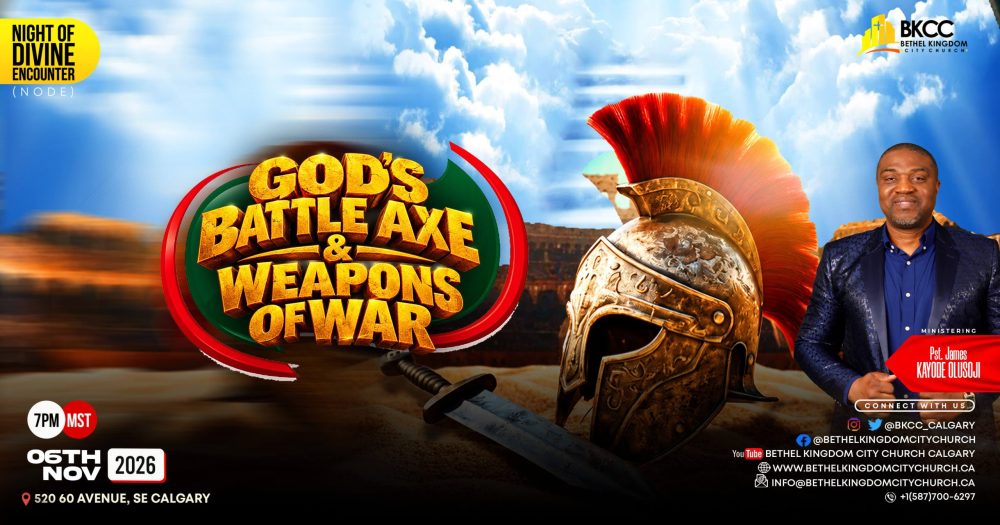
Join us for a transformative time of prayer and worship during our corporate prayer sessions:
- Early Morning Prayers: Stream live on our website daily from October 31st to November 5th, 2026, between 5:00 AM and 6:00 AM MST.
- Night of Divine Encounter: Participate online or in person on Friday, November 5th, 2026 from 7:00 PM to 10:00 PM MST. We will hold our physical meeting at:
520 60 Avenue, SE, Calgary.
You can also stream live via our Church’s website, Facebook, Twitter, or YouTube channels.
Become Part of the BKCC Family:
- Interested in becoming a member? Fill out the “I’m New“ form on our website, and we’ll reach out to you.
- Ready to serve? Complete the “Volunteer“ form, and we’ll connect with you about opportunities.
- Want to support the work of God? Visit the “Give“ section of our website to learn how you can contribute.
- Share your testimony with us by emailing [email protected].
We look forward to connecting with you as we experience God’s divine presence together!
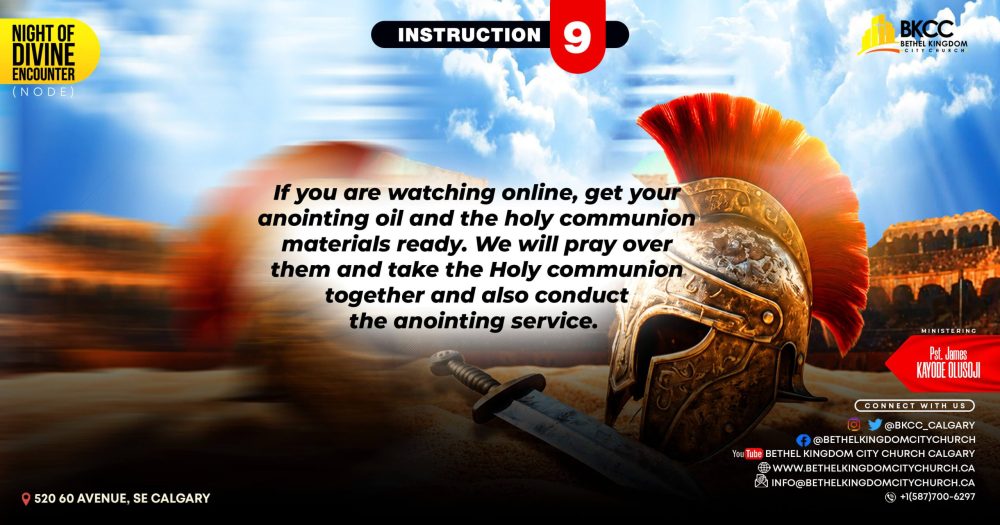
Check Out NODE Instructions:

Welcome to Bethel Kingdom City Church Online – Church Without Walls
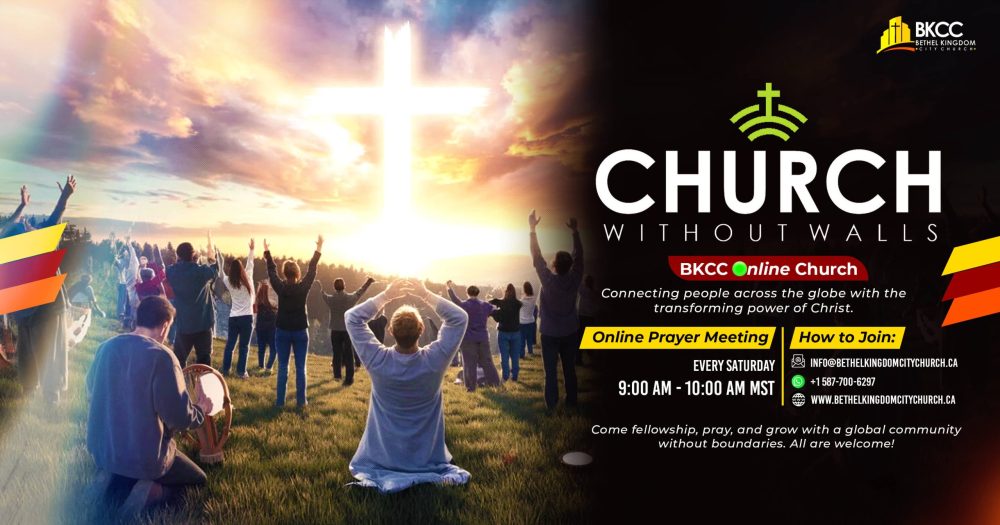
No matter where you are in the world, you are invited to be part of a growing global community centered on faith, prayer, and the transforming power of Jesus Christ. Bethel Kingdom City Church Online is a place where boundaries disappear and hearts connect.
Join us as we fellowship, pray, and grow together—online, yet united in spirit.
How to Connect With Us:
-
📧 Email: [email protected]
-
📞 Phone/WhatsApp: +1 (587) 700-6297
-
🌐 New Here? Simply fill out the “I’m New” form on our website
Whether you’re seeking prayer, community, or a deeper walk with Christ, there’s a place for you here.
All are welcome—come and experience Church Without Walls.
A Global Reach of 207 Countries in 2025 via BKCC Church’s Website

